
A worker in Ontario earning $65,000 might look at their pay stub and wonder why so much tax is deducted. Part of it goes to the federal government. Another portion goes to the province. Together, these two layers form Canada’s income tax system. Understanding the difference between them can make tax filing far less confusing.
Quick insight: In Canada, your total income tax is a combination of federal and provincial rates applied progressively. This means your actual tax burden depends not just on income, but also on your province, available credits, and deductions.
Keywords covered: federal tax Canada, provincial tax rates Canada, combined tax rate Canada, marginal vs effective tax rate Canada.
Federal vs Provincial Tax Canada Key Differences, Rates, and How They Work Together
Canada operates a dual income tax system. Both the federal government and provincial governments collect income taxes from individuals and businesses. The result is a combined tax bill based on the same taxable income but calculated using two different sets of rates and credits.
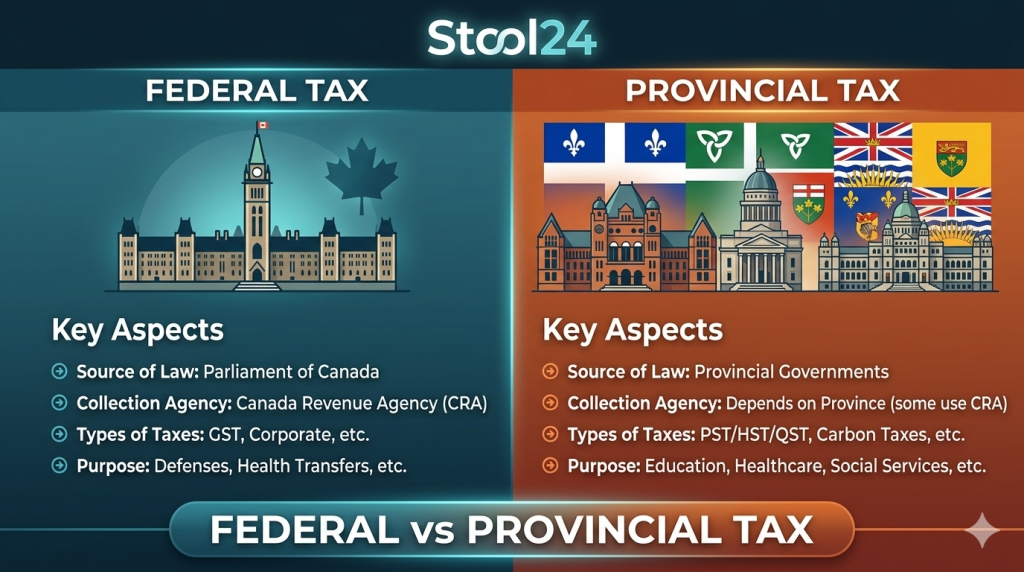
In most provinces, the Canada Revenue Agency administers both federal and provincial income taxes. Taxpayers submit a single tax return, and the agency distributes the provincial portion to each province.
Understanding the Canadian Income Tax System
The Canadian tax system is structured so that both levels of government can raise revenue. Federal taxes fund national programs, while provincial taxes support services like healthcare and education within each province.
How taxation works in Canada
Income taxes in Canada are progressive. That means higher income levels are taxed at higher rates. Your final tax bill includes multiple components:
- Federal income tax
- Provincial or territorial income tax
- Payroll deductions such as CPP and EI
Each level of government sets its own tax brackets and credits, which are applied to your taxable income.
What is taxable income in Canada?
Taxable income is the portion of your total earnings subject to income tax after deductions. It includes employment income, business income, rental income, and investments.
- Gross income – total earnings
- Deductions – RRSP, childcare, business expenses
- Taxable income – amount used to calculate both federal and provincial tax
Understanding taxable income is crucial because both federal and provincial taxes are calculated based on this number.
Why Canadians pay both federal and provincial taxes
The Canadian Constitution allows both levels of government to tax income. The federal government funds national programs like defence, infrastructure, and federal benefits. Provinces use their tax revenue to fund healthcare systems, schools, and regional services.
Because responsibilities are shared, income taxes are shared too.
Who collects taxes in Canada
The Canada Revenue Agency (CRA) collects federal and provincial taxes for most provinces. However, Quebec operates its own tax authority called Revenu Québec.
Quebec residents must file two tax returns—one provincial and one federal.
Federal vs Provincial Tax Canada Core Differences
The difference between federal and provincial tax mainly comes down to who sets the rates and how revenue is used. The following table highlights the key distinctions.
This table compares federal and provincial income taxes in Canada.
| Feature | Federal Tax | Provincial Tax |
|---|---|---|
| Government level | Federal Government | Provincial or Territorial Government |
| Tax rates | Same across Canada | Different in each province |
| Administration | Canada Revenue Agency | CRA or Revenu Québec |
| Credits | Federal tax credits | Provincial tax credits |
| Purpose | National programs | Provincial services |
Key responsibilities of federal taxes
Federal taxes fund programs that benefit the entire country. Examples include:
- National defence
- Employment insurance programs
- Federal infrastructure investments
- Old Age Security and federal benefits
According to the Canada Revenue Agency, federal tax revenue supports many nationwide public programs and services.
Key responsibilities of provincial taxes
Provincial taxes pay for services delivered at the regional level. These services include hospitals, schools, public transportation systems, and social services.
Because each province has different budgets and economic priorities, provincial tax rates vary across Canada.
Federal vs Provincial Tax Canada Side-by-Side Comparison
| Factor | Federal Tax | Provincial Tax |
|---|---|---|
| Applies to | All Canadian residents | Based on province of residence |
| Rate structure | Progressive (same nationwide) | Progressive (varies by province) |
| Control | Federal government | Provincial governments |
| Flexibility | Limited variation | Highly flexible |
| Impact on total tax | Major portion | Varies significantly |
Federal Income Tax in Canada Explained
Federal income tax applies to all Canadian taxpayers regardless of province. The government uses progressive tax brackets, meaning higher income portions are taxed at higher rates.
Federal tax brackets and marginal tax system
Canada’s federal tax system uses marginal tax rates. Each portion of income falls into a different bracket.
For example, a taxpayer earning $70,000 does not pay the same rate on all income. Instead, the first portion is taxed at the lowest rate, and higher portions move into higher brackets.
According to the Department of Finance Canada, progressive taxation helps maintain fairness by taxing income proportionally.
Federal tax credits and deductions
Federal credits reduce the amount of tax you owe. Common credits include:
- Basic personal amount
- Canada workers benefit
- Disability tax credit
- Tuition tax credits
These credits lower your final tax bill after the initial calculation.
Example: Federal tax calculation
Suppose a taxpayer earns $60,000 in taxable income. The federal government applies multiple tax brackets to different portions of that income. After calculating the tax owed in each bracket, federal credits are applied to reduce the total.
The final result becomes the federal portion of the taxpayer’s overall tax bill.
Provincial Income Tax in Canada Explained
Provincial income tax works similarly to federal tax but is determined by each province. The same taxable income is used, but provinces apply their own brackets and tax credits.
How provincial tax rates differ by province
Provincial tax systems vary significantly. Some provinces have lower rates to attract workers and businesses, while others maintain higher rates to support broader public services.
For example, Alberta traditionally has lower provincial tax rates compared with provinces like Quebec or Nova Scotia.
Provinces with highest and lowest income taxes
Tax differences across Canada can affect how much individuals pay overall.
Generally speaking:
- Quebec often has among the highest provincial income tax rates
- Alberta typically has lower provincial income tax levels
- Ontario falls somewhere in the middle
These variations explain why people with identical incomes may pay different total taxes depending on where they live.
Example provincial tax calculation
Imagine two individuals earning $70,000—one living in Ontario and another in British Columbia. Even though their federal tax will be the same, the provincial portion will differ because each province applies different tax brackets and credits.
The difference may add up to hundreds or even thousands of dollars annually.
How Federal and Provincial Taxes Are Combined
Both taxes are calculated separately but appear together on your annual tax return.
To estimate your combined taxes quickly, many Canadians use tools such as the Canada income tax calculator, which helps break down federal and provincial tax instantly.
Quick calculations can reveal how income increases affect both federal and provincial taxes.
Example scenario: $60,000 income
This simplified example illustrates how total tax might be calculated.
This table shows how federal and provincial taxes combine.
| Income Component | Estimated Amount |
|---|---|
| Taxable Income | $60,000 |
| Federal Tax | $7,500 (approx.) |
| Provincial Tax | $3,500 (approx.) |
| Total Income Tax | $11,000 |
Actual results depend on deductions, credits, and the province where the taxpayer lives.
Important Exceptions and Special Cases
While most Canadians follow a single federal tax filing process, a few exceptions exist in the system.
Quebec’s separate tax filing system
Quebec is the only province where residents file both federal and provincial tax returns separately. The province manages its own income tax collection through Revenu Québec.
This unique system reflects Quebec’s longstanding tax administration autonomy.
Provincial tax credits vs federal credits
Tax credits exist at both levels of government. Federal credits apply nationwide, while provinces offer their own credits based on regional priorities.
For example, some provinces offer additional credits for seniors, energy efficiency improvements, or childcare expenses.
How tax rates change each year
Both federal and provincial governments review tax brackets annually. Changes typically reflect inflation adjustments or policy updates introduced in government budgets.
Pros and Cons of Canada’s Dual Tax System
Advantages
- Balanced revenue between federal and provincial governments
- Provinces can adjust tax rates based on local needs
- Supports regional economic strategies
Disadvantages
- More complex tax system for individuals
- Different tax burdens across provinces
- Harder to compare net income nationally
Common Mistakes When Understanding Canadian Taxes
Tax confusion often comes from a few common misunderstandings.
Thinking federal tax is the only tax
Many taxpayers assume the federal government collects all income taxes. In reality, provincial taxes often make up a significant portion of the total tax bill.
Confusing income tax with GST/HST
Income taxes are different from consumption taxes such as GST or HST. Income tax applies to earnings, while GST/HST applies to purchases.
Misunderstanding marginal tax rates
A higher tax bracket does not mean all income is taxed at that rate. Only the portion within that bracket is taxed at the higher level.
Understanding this concept helps prevent unnecessary worry about earning more income.
Expert Tips to Better Understand Your Canadian Taxes
Managing your taxes becomes easier when you understand how federal and provincial systems interact.
To better understand tax structure, read this detailed guide on how income tax works in Canada.
Use tax calculators and CRA tools
Online tools can quickly estimate combined taxes. Many taxpayers use calculators to preview their annual tax bill before filing.
Check provincial tax credits
Each province offers unique credits. Reviewing them can reduce your tax bill significantly.
Understand your marginal vs effective tax rate
Your marginal tax rate applies to your last dollar of income, while your effective rate reflects the average tax paid overall.
For a deeper explanation of Canada’s tax structure, see the guide on income tax works in canada.
Which Matters More: Federal or Provincial Tax?
Both taxes matter, but provincial tax often creates the biggest difference in your total tax bill.
- Federal tax is consistent across Canada
- Provincial tax varies widely
- Your location directly impacts your net income
For example, someone earning $70,000 in Alberta may pay significantly less total tax than someone earning the same income in Quebec.
FAQS For federal vs provincial tax canada
Do Canadians pay both federal and provincial income tax?
Yes. Most Canadians pay both federal and provincial income tax on the same taxable income. The federal government sets nationwide tax brackets, while each province applies its own rates and credits. These taxes are usually calculated together on one return filed with the Canada Revenue Agency.
What is the main difference between federal and provincial tax in Canada?
The main difference is who sets the rates and how the revenue is used. Federal tax rates are the same across the country, while provincial tax rates vary depending on where you live. Provinces use their portion of income tax to fund services such as healthcare and education.
How are federal and provincial taxes calculated together?
Both taxes are calculated separately using the same taxable income. First, federal tax brackets are applied, then provincial brackets are applied based on your province of residence. The two amounts are added together to determine your total income tax payable.
Which province has the highest income tax rates in Canada?
Provinces such as Quebec and Nova Scotia generally have higher combined marginal income tax rates compared with provinces like Alberta or Saskatchewan. However, the total tax you pay also depends on credits, deductions, and your income level. Provincial tax policies can also change each year.
Why do Quebec residents file two tax returns?
Quebec administers its own provincial income tax system through Revenu Québec. Because of this arrangement, residents must file one federal tax return with the Canada Revenue Agency and a separate provincial return for Quebec taxes.
Are federal income tax rates the same across all provinces?
Yes. Federal income tax brackets and rates are the same for all taxpayers across Canada regardless of province. Only the provincial portion changes depending on where you live.
How can I estimate my federal and provincial taxes in Canada?
The easiest way is to use an online income tax calculator designed for Canadian tax rules. These tools estimate federal and provincial taxes together based on your income, province, and deductions. They provide a quick preview of your expected total tax before filing.
Sources and References
- Canada Revenue Agency (CRA)
- Department of Finance Canada
- Provincial government tax authorities
Quick Summary
The difference between federal vs provincial tax Canada comes down to who sets the tax rates and how the revenue is used. Federal taxes fund national programs, while provincial taxes support regional services like healthcare and education.
Both taxes apply to the same taxable income and are usually calculated together through a single return administered by the Canada Revenue Agency. Because provinces set their own tax brackets and credits, the total tax paid can vary depending on where someone lives.
Understanding how both systems work together helps Canadians estimate their taxes more accurately and make smarter financial decisions.
Estimate Your Taxes Accurately
Understanding federal vs provincial tax Canada is only the first step. To see how these taxes apply to your exact income, use a reliable calculator.
👉 Try the Canada Income Tax Calculator now to instantly estimate your federal and provincial taxes and plan your finances better.