
Understanding what is GST in Canada is essential for both consumers and businesses. Whether you’re shopping for groceries, paying for services, or running a small business, knowing how the Goods and Services Tax applies can help you plan your finances better. This article explains GST basics, provincial differences, calculation methods, and exemptions so you can confidently manage your spending and taxes.
Understanding GST in Canada
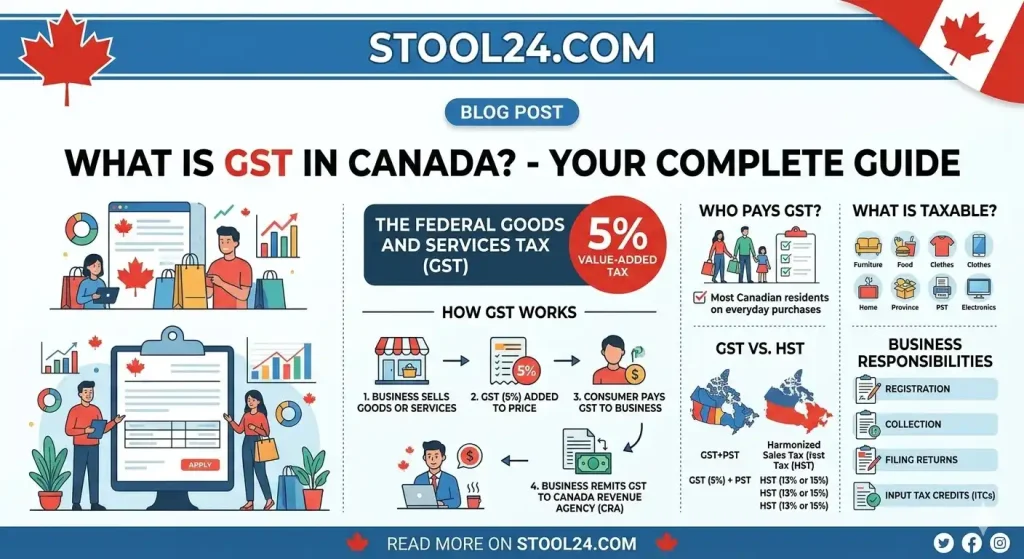
GST stands for Goods and Services Tax, a federal sales tax applied across Canada. It is currently set at 5% and is collected on most goods and services sold, except for exempt or zero-rated items. The Canada Revenue Agency (CRA) oversees GST collection and remittance for businesses
How GST Works on Purchases
Every time you purchase a taxable product or service, GST is added to the selling price. For example, if an item costs $100, you would pay $105 in total with GST included. Businesses collect GST and remit it to the CRA, ensuring compliance with federal regulations.
Who Pays GST in Canada
Consumers ultimately pay GST on most purchases. Businesses must charge GST on taxable sales but can claim input tax credits for GST paid on their business purchases. This ensures that the tax is applied fairly throughout the supply chain see .
GST Rate and Provincial Differences
The standard federal GST rate is 5%, but some provinces combine it with Provincial Sales Tax (PST) to create the Harmonized Sales Tax (HST). Provinces like Ontario, New Brunswick, and Nova Scotia apply HST instead of separate GST and PST.
GST vs HST vs PST
Understanding the difference between GST, HST, and PST helps avoid confusion at checkout. GST is federal, HST combines federal and provincial taxes, and PST is provincial only. Here’s a quick comparison:
| Province | GST | PST | HST |
|---|---|---|---|
| Ontario | 5% | — | 13% |
| Alberta | 5% | 0% | — |
| British Columbia | 5% | 7% | — |
| Nova Scotia | — | — | 15% |
This table shows the GST, PST, and HST rates across major Canadian provinces to clarify tax responsibilities for consumers and businesses.
Taxable, Zero-Rated, and Exempt Items
Not all products are taxed equally. Some items are zero-rated, meaning GST applies at 0%, while exempt items are not subject to GST at all. Common zero-rated items include basic groceries, prescription drugs, and certain medical devices. Exempt items often include financial services and residential rent.
Examples of GST Application
Imagine buying a $200 electronic gadget. With GST, your total cost becomes $210. If you purchase basic groceries, GST does not apply, reducing your overall spending.
How to Calculate GST
Using a simple formula, GST is calculated as: GST Amount = Price × 5%. For mixed purchases or HST provinces, it is important to apply the correct provincial rate. A practical tool like the GST/HST Calculator Canada can make this easier.
Use this 1-2 line short paragraph using a calculator: Determine the GST quickly for your purchases, whether shopping online or in-store, with instant results. Tax refund guide
How GST Impacts Consumers and Businesses
GST affects how consumers budget for everyday expenses and how businesses price their goods and services. For businesses, proper GST management ensures compliance with CRA regulations and may help claim input tax credits on business purchases.
Practical Tips for Managing GST
- Always check if the GST/HST rate applies to your province.
- Keep receipts for input tax credits if you are a business.
- Use online calculators for accurate estimates.
- Consult tools like reduce taxable income legally strategies to optimize tax savings.
Common Mistakes to Avoid
Some Canadians mistakenly assume all items are taxable. Misunderstanding the difference between zero-rated and exempt items can lead to overpayment. Businesses must avoid incorrect GST charges or missed filings to prevent penalties.
Expert Insights
According to the CRA, accurate GST collection supports public services and ensures fairness in the marketplace. Canadians are encouraged to stay informed about tax updates and provincial differences for better financial planning. Tools like calculators and practical guides simplify the process and help avoid errors.
FAQS For what is gst in canada
What does GST stand for in Canada?
GST stands for Goods and Services Tax, which is a federal sales tax applied to most goods and services sold across Canada. The current GST rate is 5%.
Who has to pay GST in Canada?
Consumers pay GST on most purchases of taxable goods and services. Businesses collect GST and remit it to the Canada Revenue Agency while claiming input tax credits for their business expenses.
What is the difference between GST and HST?
GST is the federal tax only, while HST (Harmonized Sales Tax) combines GST and provincial sales tax in certain provinces like Ontario and Nova Scotia. HST simplifies collection in provinces that use it.
Which items are exempt or zero-rated from GST?
Zero-rated items like basic groceries and prescription drugs are taxed at 0%, while exempt items, such as most financial services and residential rent, are not subject to GST at all.
How can I calculate GST on my purchases?
You can calculate GST manually using the formula: Price × 5%, or use an online tool like the GST/HST Calculator Canada for instant results.
Does GST apply in all provinces?
GST applies federally in all provinces, but some provinces combine it with PST to form HST. Provinces like Alberta only charge GST, while Ontario and Nova Scotia use HST.
How does GST affect my budget and prices?
GST increases the final cost of most purchases by 5% or more in HST provinces. Understanding which items are taxable, zero-rated, or exempt helps Canadians plan expenses more accurately.
Quick Summary
The Goods and Services Tax (GST) in Canada is a federal 5% tax applied to most goods and services, with variations depending on the province. Understanding GST, HST, and PST differences, knowing taxable items, and using tools like the GST/HST Calculator Canada can help Canadians plan and budget effectively. Being aware of exemptions, zero-rated items, and practical tips ensures you stay compliant while maximizing tax efficiency.
{ “@context”: “https://schema.org”, “@type”: “FAQPage”, “mainEntity”: [ { “@type”: “Question”, “name”: “What does GST stand for in Canada?”, “acceptedAnswer”: { “@type”: “Answer”, “text”: “GST stands for Goods and Services Tax, which is a federal sales tax applied to most goods and services sold across Canada. The current GST rate is 5%.” } }, { “@type”: “Question”, “name”: “Who has to pay GST in Canada?”, “acceptedAnswer”: { “@type”: “Answer”, “text”: “Consumers pay GST on most purchases of taxable goods and services. Businesses collect GST and remit it to the Canada Revenue Agency while claiming input tax credits for their business expenses.” } }, { “@type”: “Question”, “name”: “What is the difference between GST and HST?”, “acceptedAnswer”: { “@type”: “Answer”, “text”: “GST is the federal tax only, while HST (Harmonized Sales Tax) combines GST and provincial sales tax in certain provinces like Ontario and Nova Scotia. HST simplifies collection in provinces that use it.” } }, { “@type”: “Question”, “name”: “Which items are exempt or zero-rated from GST?”, “acceptedAnswer”: { “@type”: “Answer”, “text”: “Zero-rated items like basic groceries and prescription drugs are taxed at 0%, while exempt items, such as most financial services and residential rent, are not subject to GST at all.” } }, { “@type”: “Question”, “name”: “How can I calculate GST on my purchases?”, “acceptedAnswer”: { “@type”: “Answer”, “text”: “You can calculate GST manually using the formula: Price × 5%, or use an online tool like the GST/HST Calculator Canada for instant results.” } }, { “@type”: “Question”, “name”: “Does GST apply in all provinces?”, “acceptedAnswer”: { “@type”: “Answer”, “text”: “GST applies federally in all provinces, but some provinces combine it with PST to form HST. Provinces like Alberta only charge GST, while Ontario and Nova Scotia use HST.” } }, { “@type”: “Question”, “name”: “How does GST affect my budget and prices?”, “acceptedAnswer”: { “@type”: “Answer”, “text”: “GST increases the final cost of most purchases by 5% or more in HST provinces. Understanding which items are taxable, zero-rated, or exempt helps Canadians plan expenses more accurately.” } } ] }